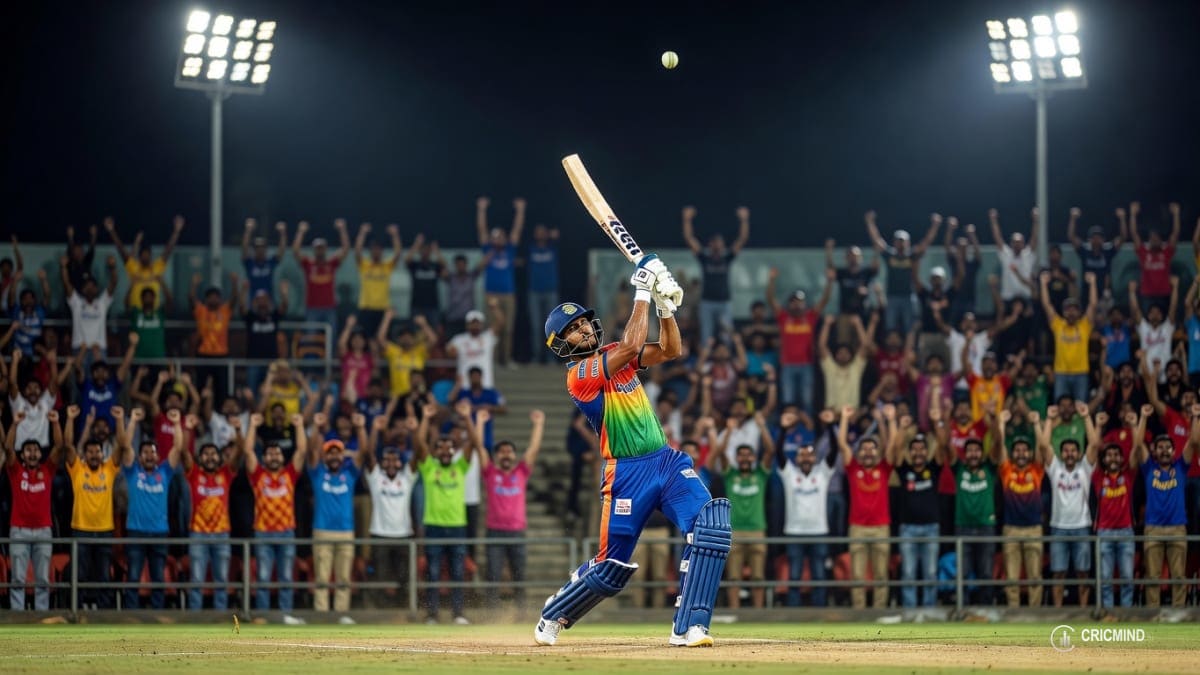
The Chess Match at 150 km/h: Why IPL Captaincy Is the Hardest Job in Cricket
There is a moment in every tight IPL chase — somewhere around the 14th over, two wickets down, the asking rate climbing past ten — when a captain earns or loses his franchise. The field setting, the bowling change, the decision to burn a review: these choices unfold in seconds, are judged in hindsight, and ultimately separate the great captains from the merely good ones. Across 1,169 IPL matches spanning 2008 to 2025, the data tells a story not just of individual brilliance but of tactical intelligence compounding over time.
The IPL is, at its core, a captaincy laboratory unlike any other in world cricket.
Toss Intelligence: The Data Behind the Coin
Before a ball is bowled, a captain faces his first high-stakes decision. The venue data from across IPL history reveals that this choice is rarely as arbitrary as the pre-match handshake suggests.
| Venue | Bat First Win % | Field First Win % | Avg 1st Innings | Avg 2nd Innings |
|---|---|---|---|---|
| Eden Gardens | 39% | 61% | 160 | 147 |
| Wankhede Stadium | 48% | 51% | 166 | 154 |
| M Chinnaswamy Stadium | 40% | 55% | 168 | 146 |
| Feroz Shah Kotla | 45% | 53% | 162 | 148 |
The numbers carry a clear philosophical argument: across virtually every major IPL venue, chasing is the dominant strategy. At Eden Gardens, the advantage is stark — teams fielding first have won 61% of matches there. At M Chinnaswamy Stadium in Bangalore, where first-innings scores average 168 but second-innings averages drop sharply to 146, the dew factor and pressure of a chase paradoxically still favour the team in the field, who have won 55% of games.
The captain who ignores this data and defaults to batting first out of habit or insecurity is already conceding ground before his team has touched the ball. The great captains — the ones who have won repeatedly — understand that the coin is an asset to be used intelligently.
MS Dhoni and the Architecture of Consistency
No analysis of IPL captaincy is complete without returning, again and again, to MS Dhoni. The numbers around him as a batsman are revealing precisely because of their constraints: 5,439 runs across 241 matches, an average of 38.30, a strike rate of 137.45, with 264 sixes and a highest score of 84 — a man who never made a T20 hundred but finished unbeaten 99 times*. That last number is not a batting statistic. It is a captaincy statistic.
Dhoni's genius was resource management under duress. That extraordinary not-out count — the highest among any major batsman in this dataset — speaks to a captain who understood exactly when to be there, when to finish the job, and when to sacrifice personal milestones for team outcomes. He bat-captained from the back end while simultaneously making bowling changes, adjusting fields, and holding the collective nerve of eleven men in a 20-over pressure cooker.
Chennai Super Kings won IPL titles in 2010, 2011, 2018, 2021, and 2023 — five championships across their 252 matches, registering a 56.3% win rate, the highest of the two most successful franchises. That consistency across radically different squad compositions, across bans and returns, across a decade and a half of personnel changes, is the signature of captaincy that transcends tactics.
The Mumbai Indians Model: Systemic Thinking
Where CSK's success was personality-driven, Mumbai Indians built something arguably more remarkable: a system. Five titles — 2013, 2015, 2017, 2019, and 2020 — and a 54.5% win rate across 277 matches. Their record is the most decorated in the tournament's history in terms of sheer volume of matches won: 151 victories.
The Rohit Sharma captaincy model was architecturally different from Dhoni's. Where Dhoni improvised intuitively, Rohit built structures. His use of Jasprit Bumrah is a case study in bowling resource management: 186 wickets from just 145 matches, an economy of 7.12, an average of 21.65, with a best of 5/10. For a captain to get those returns from a fast bowler in T20 cricket — a format that supposedly neutered pace — required extraordinary man-management and tactical courage. Bumrah was protected, rotated, and deployed in phases that maximised his impact in powerplays and death overs simultaneously.
Mumbai's highest team total of 247 against Delhi Capitals in 2024 and their capacity to post and defend any score reflects a franchise where captaincy decisions have been institutionally embedded.
The Kolkata Knight Riders Enigma: Spin as Weapon
Few captaincy decisions in IPL history have been as influential as the deployment of Sunil Narine as both an opening batsman and a primary spinner. Narine's bowling figures — 192 wickets from 187 matches, economy of just 6.79, the lowest among high-volume bowlers in this dataset — represent a captain's dream: a weapon who operates at almost unprecedented value in a high-scoring format.
KKR's three titles (2012, 2014, 2024) and their 51.1% win rate across 264 matches reflect a franchise that has repeatedly found tactical angles that opponents struggle to prepare for. The decision to bowl Narine early — to attack in the powerplay with mystery spin rather than conventional pace — was a captaincy innovation that changed how teams thought about their first six overs.
Their highest team total of 272 against Delhi Capitals in 2024 and the 2024 title itself, won with a squad that many had written off pre-season, speaks to captaincy that adapted rapidly.
Virat Kohli and the Weight of Captaincy Without a Title
The most complex captaincy conversation in IPL history belongs to Virat Kohli and Royal Challengers Bangalore. Kohli has played 259 matches, scored 8,671 runs — the most by any batter in IPL history — at an average of 39.59 with 63 fifties and 8 hundreds. As a captain, he led RCB through some of the most dramatic near-misses the tournament has seen, including the agonising 2016 final loss to Sunrisers Hyderabad.
RCB's overall record — 119 wins from 264 matches, a 45.1% win rate, and zero titles until 2025 when they finally broke through — raises a genuine analytical question about the relationship between individual captaincy quality and team composition. Kohli's aggression at the toss, his willingness to back young bowlers, and his own batting contributions were unimpeachable. What the data cannot measure is what happens when a captain carries the batting lineup on his own shoulders while simultaneously trying to manage a bowling attack that lacked the consistent weaponry of rivals.
RCB finally won in 2025. The drought is over. But the 17-season wait is itself a data point about how captaincy, however gifted, cannot fully overcome structural squad deficiencies.
Bowling Changes: Where Captaincies Are Actually Won
The most undervalued captaincy skill in T20 cricket is the mid-innings bowling change. It happens in real time, under pressure, with imperfect information. The best IPL captains have shown a willingness to use their premium bowlers in non-standard phases — bringing back a strike wicket-taker at the 13th over when the opposition is rebuilding rather than saving him