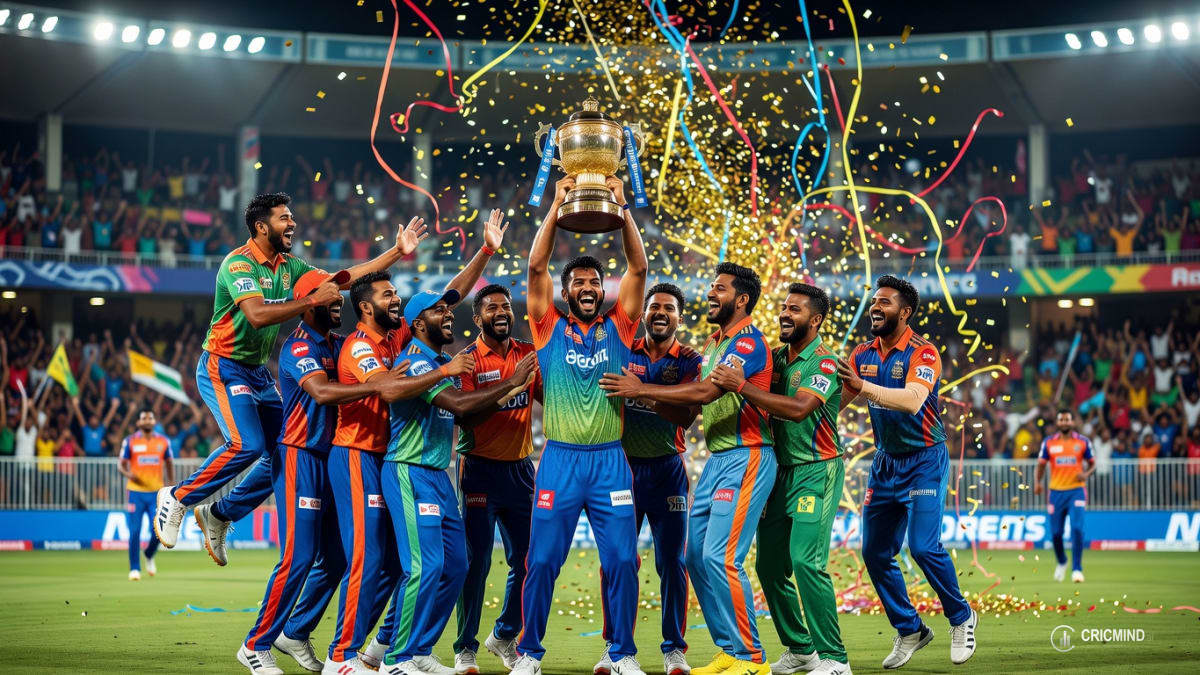
The Season That Changed Everything
IPL 2013 is the most consequential season in the tournament's history — not because of the quality of the cricket, but because of the off-field events that permanently reshaped the IPL's governance, franchise landscape, and public perception. The spot-fixing scandal that emerged during the 2013 season led directly to the suspension of Chennai Super Kings and Rajasthan Royals, the termination of the Pune Warriors franchise, and the Supreme Court-ordered structural overhaul that redefined how the BCCI operated.
Yet the 2013 season also produced some genuinely excellent cricket — specifically, Mumbai Indians' first IPL title and the emergence of a group of Indian players who would define the tournament for the next decade.
The Nine-Team Problem
IPL 2013 was supposed to be played with nine teams after Deccan Chargers' termination in late 2012. The league had expanded to include Pune Warriors India (2011), Kochi Tuskers Kerala (2011, terminated after one season), and Deccan Chargers (terminated 2012, replaced by Sunrisers Hyderabad). The 2013 edition was structured around nine franchises.
| Team | League matches scheduled | Points |
|---|---|---|
| Mumbai Indians | 16 | 20 |
| Chennai Super Kings | 16 | 19 |
| Rajasthan Royals | 16 | 17 |
| Sunrisers Hyderabad | 16 | 16 |
| Royal Challengers Bangalore | 16 | 15 |
| Kolkata Knight Riders | 16 | 14 |
| Kings XI Punjab | 16 | 12 |
| Delhi Daredevils | 16 | 10 |
| Pune Warriors India | 14* | 10 |
*Pune Warriors India withdrew from the tournament mid-season on 21 May 2013, citing disputes with the BCCI over franchise fees and television revenue distribution. Their remaining two matches were cancelled, leaving the tournament effectively running with eight teams.
The Spot-Fixing Scandal
On 16 May 2013, three Rajasthan Royals cricketers — S. Sreesanth, Ajit Chandila, and Ankeet Chavan — were arrested by the Delhi Police on charges of spot-fixing: deliberately conceding runs in specific overs in exchange for payment. The arrests were followed within days by the arrest of Gurunath Meiyappan, son-in-law of N. Srinivasan (BCCI President at the time and owner of Chennai Super Kings' holding company), on charges of betting and communicating inside information.
The timing was devastating for the tournament's credibility. The spot-fixing arrests came during the playoff week — the climax of the season — and created an unprecedented crisis for the BCCI. Matches continued. Mumbai Indians won the title. But the shadow over the entire season made the championship feel incomplete.
The Cricket Beneath the Scandal
The 2013 MI title was genuinely deserved. Rohit Sharma scored 538 runs as the team's top batter. Lasith Malinga took 18 wickets. The playoffs were hard-fought: MI beat Rajasthan Royals in the first qualifier, then returned to beat Chennai Super Kings in the final by 23 runs. Malinga's two wickets in the 19th over — when CSK needed 23 from the last 12 balls — sealed it.
Notable performances from the 2013 season that extended beyond the headline events:
- Suresh Raina scored 548 runs for CSK, his best IPL season to that point
- Dwayne Bravo's 32 wickets for CSK set a new single-season record at the time
- Virat Kohli scored 634 runs for RCB, beginning his ascent as the tournament's premier batter
- Sunil Narine maintained his exceptional form for KKR: 24 wickets in his second season
The Aftermath: Supreme Court Intervention
The 2013 spot-fixing inquiry eventually led to a Supreme Court-appointed committee — the Mudgal Committee — investigating the conduct of IPL franchises. The committee's findings resulted in a two-year ban for CSK and RR (2016-2017), the permanent debarment of Gurunath Meiyappan from cricket administration, and comprehensive new governance rules for the BCCI.
N. Srinivasan was asked to step aside from his BCCI role during the investigation. The BCCI's constitution was rewritten in 2017 following the Lodha Committee recommendations — also a direct consequence of the 2013 scandal. The IPL's governance structures today are fundamentally different from what existed in 2013, and almost all those differences trace directly to that season.
The Four-Team Format Debate
IPL 2013's muddled nine-then-eight team format reignited the debate about optimal IPL tournament size. The argument for ten teams: more revenue, more cities, broader fan base. The argument against: scheduling complexity, dilution of player quality, difficulty creating competitive balance.
The IPL ran with eight teams from 2014 to 2021 — a period that many cricket analysts consider the tournament's competitive peak. The return to ten teams in 2022 with Lucknow Super Giants and Gujarat Titans has produced competitive imbalance arguments in both directions.
FAQ
Q: Who won IPL 2013?
Mumbai Indians won IPL 2013, defeating Chennai Super Kings by 23 runs in the final at Eden Gardens in Kolkata. It was MI's first IPL title. Rohit Sharma was the team's top scorer with 538 runs and Lasith Malinga took 18 wickets.
Q: What was the IPL 2013 spot-fixing scandal?
Three Rajasthan Royals players — S. Sreesanth, Ajit Chandila, and Ankeet Chavan — were arrested in May 2013 on charges of spot-fixing: deliberately conceding runs in specific overs for payment. The scandal also involved allegations against Gurunath Meiyappan (CSK) and eventually led to the two-year suspension of both CSK and RR from the IPL.
Q: Why did Pune Warriors India withdraw from IPL 2013?
Pune Warriors India withdrew from IPL 2013 mid-season on 21 May 2013, citing unresolved disputes with the BCCI over franchise fees and their share of the central television revenue pool. Their two remaining matches were cancelled. The franchise was subsequently terminated and did not return to the IPL.