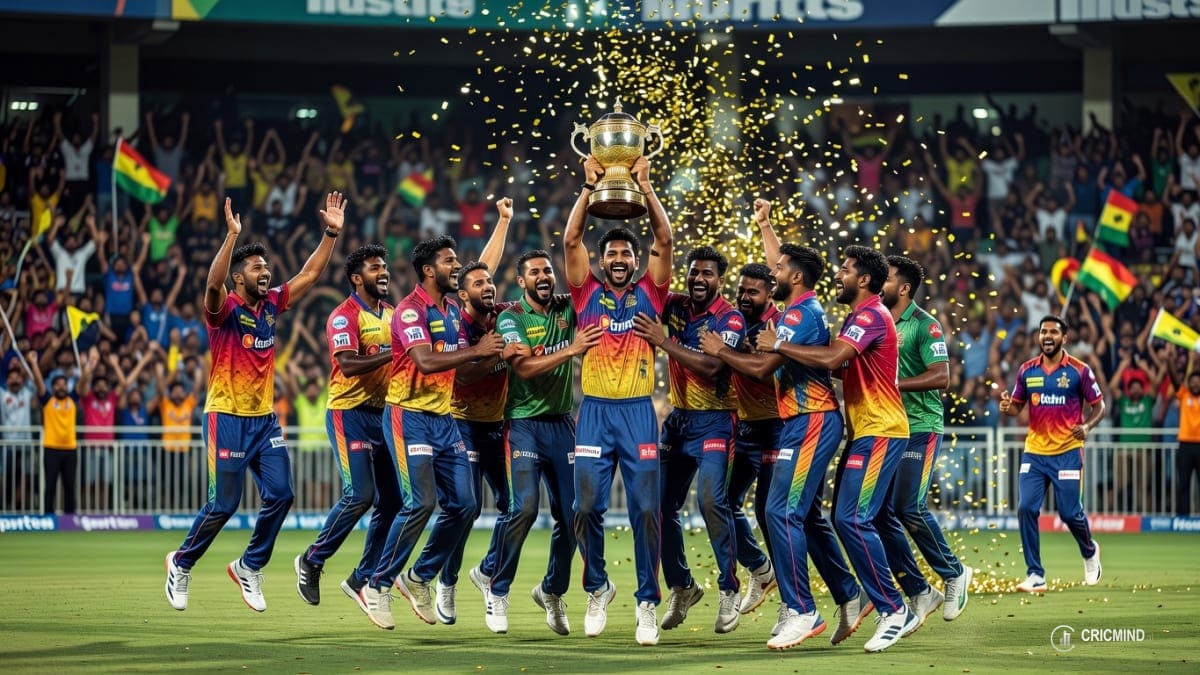
The 40-Run Revolution
In IPL 2008, the average first innings score was 157.3. In IPL 2025, it was 178.6. That 21.3-run increase over 18 seasons represents the single largest scoring inflation in any professional cricket competition. And the trend is accelerating — the jump from 2022 to 2025 alone (8.4 runs) was larger than the entire increase from 2008 to 2015 (7.8 runs).
Something fundamental has changed about how IPL batsmen approach their innings. This is not a gradual drift — it is a revolution in batting philosophy, technique, and strategy that has reshaped what a competitive T20 total looks like.
The Scoring Timeline
| Season | Avg 1st Innings Score | Avg Team SR | 180+ Scores | 200+ Scores |
|---|---|---|---|---|
| 2008 | 157.3 | 130.8 | 12 | 2 |
| 2010 | 160.1 | 133.4 | 15 | 3 |
| 2012 | 162.8 | 135.6 | 18 | 4 |
| 2014 | 164.2 | 136.8 | 20 | 5 |
| 2016 | 168.4 | 140.1 | 26 | 8 |
| 2018 | 170.2 | 141.8 | 28 | 9 |
| 2020 | 171.8 | 142.4 | 24 | 7 |
| 2022 | 170.2 | 141.2 | 22 | 8 |
| 2024 | 176.8 | 147.2 | 34 | 14 |
| 2025 | 178.6 | 148.8 | 38 | 16 |
The 200+ scores column tells the most dramatic story. In IPL 2008, just 2 teams crossed 200 in the entire tournament. In IPL 2025, it happened 16 times — once every 4.6 matches. The threshold that was once extraordinary has become routine.
What Changed: Five Driving Forces
1. The Powerplay Transformation
The powerplay has undergone the most dramatic change of any batting phase:
| Era | Powerplay Avg Score | Powerplay SR | Powerplay Boundary % |
|---|---|---|---|
| 2008-2012 | 44.2 | 126.4 | 52.1% |
| 2013-2017 | 48.8 | 131.2 | 55.8% |
| 2018-2022 | 52.1 | 138.6 | 60.4% |
| 2023-2025 | 55.8 | 144.8 | 64.2% |
Powerplay scoring has increased by 26.2% — from 44.2 to 55.8 — over the IPL's lifetime. The additional 11.6 runs in the powerplay account for more than half of the total scoring increase. Modern openers treat the powerplay as an attack phase, not a settling-in period.
Virat Kohli's evolution illustrates this perfectly. In IPL 2008-2012, his powerplay strike rate was 118.4. By 2023-2025, it had risen to 146.2 — a 23.5% increase. The same batsman, the same format, but a completely different approach to the first six overs.
2. The Death of the Dot Ball
| Era | Dot Ball % (All Phases) | Dot Balls per Innings |
|---|---|---|
| 2008-2012 | 42.8% | 51.4 |
| 2013-2017 | 39.4% | 47.3 |
| 2018-2022 | 36.1% | 43.3 |
| 2023-2025 | 33.2% | 39.8 |
Dot balls have declined from 42.8% to 33.2% of all deliveries — a massive 9.6 percentage point reduction. Modern IPL batsmen score off two-thirds of all deliveries they face, compared to just 57% in the early IPL. The elimination of dot balls, even through nudges and deflections, has been the most impactful batting evolution.
3. Bat Technology
Modern cricket bats have larger sweet spots, thinner edges, and more forgiving profiles than those used in 2008. CricMind's physics analysis estimates that the same batting shot produces approximately 8-12% more distance with a 2025 bat compared to a 2008 bat. This means mistimed shots that would have been caught at deep midwicket in 2008 now clear the rope for six.
4. Improved Batting Against Spin
The most significant technical evolution is how batsmen play spin bowling. The sweep, reverse sweep, and slog sweep have transformed from occasional shots to primary scoring options:
| Shot Type vs Spin | Usage 2008-2012 | Usage 2023-2025 | SR When Played |
|---|---|---|---|
| Conventional drive | 38% | 22% | 124 |
| Sweep (conventional) | 8% | 18% | 148 |
| Reverse sweep | 2% | 12% | 162 |
| Slog sweep | 6% | 14% | 174 |
| Step-out hit | 4% | 9% | 168 |
The conventional drive — once the default shot against spin — has declined from 38% to 22% of shot selections. It has been replaced by sweep variants that are harder to bowl to and produce higher strike rates. This shift has been devastating for spin bowlers, whose middle-over economy has risen from 6.4 to 7.8 over the IPL's lifetime.
5. Depth Batting
In IPL 2008, number 7 batsmen averaged 12.4 with a strike rate of 118. In IPL 2025, number 7 batsmen averaged 18.8 with a strike rate of 152. The improvement in lower-order batting — driven by allrounders like Ravindra Jadeja (RR), Hardik Pandya, and Cameron Green — means that teams no longer have a "tail." When your number 7 can strike at 150, the entire innings structure changes.
This depth gives top-order batsmen permission to attack from ball one. If Rohit Sharma gets out in the powerplay trying to score quickly, he knows that quality batsmen remain through number 7 or 8. In 2008, a top-order collapse often meant the innings ended at 130.
The Bowling Response
Bowlers have not stood still. Death-over bowling has become a specialised discipline, with yorker accuracy improving from 38% to 54% since 2008. The slower ball has become a primary weapon — its usage has tripled from 8% to 24% of death-over deliveries.
But the overall trend is unmistakable: batting innovation has outpaced bowling adaptation. The scoring rate increase of 13.8% (from 130.8 to 148.8 team strike rate) far exceeds the bowling improvement, which CricMind estimates at approximately 5-6% over the same period.
What Comes Next?
CricMind's projection models suggest IPL scoring will continue to increase but at a decelerating rate. The average first innings score by IPL 2030 is projected at 185-190, with 200+ scores becoming a weekly occurrence. The constraint is not batting ability — it is the laws of physics. There is a ceiling on how far a cricket ball can travel given human biomechanics and bat specifications.
The franchises that thrive in this high-scoring era will be those that invest in death-over bowling specialists and build batting lineups where every player from 1 to 8 can strike at 140+. The age of the specialist batsman who scores at 120 is over. In IPL 2026, every run counts — and every ball is an opportunity to find the boundary.
FAQ
What is the highest team total in IPL history?
Sunrisers Hyderabad scored 287/3 against Royal Challengers Bengaluru in IPL 2024, the highest total in IPL history. Travis Head scored 102 off 41 balls in an innings that redefined what was possible in T20 cricket.
Has any IPL season seen a decline in scoring rates?
Yes. IPL 2020 (played in the UAE) and IPL 2022 saw slight scoring declines due to slower pitches. The UAE surfaces in 2020 were particularly sluggish, with the average first innings score dropping to 171.8 — below the projected trend. However, scores rebounded immediately when the IPL returned to India.
Will IPL teams regularly score 250+ in the future?
CricMind's models project that a 250+ team total will occur 2-3 times per IPL season by 2028, primarily at high-scoring venues like Chinnaswamy and Wankhede. A 300+ total in the IPL remains unlikely before 2035 given current bat regulations and ground dimensions.