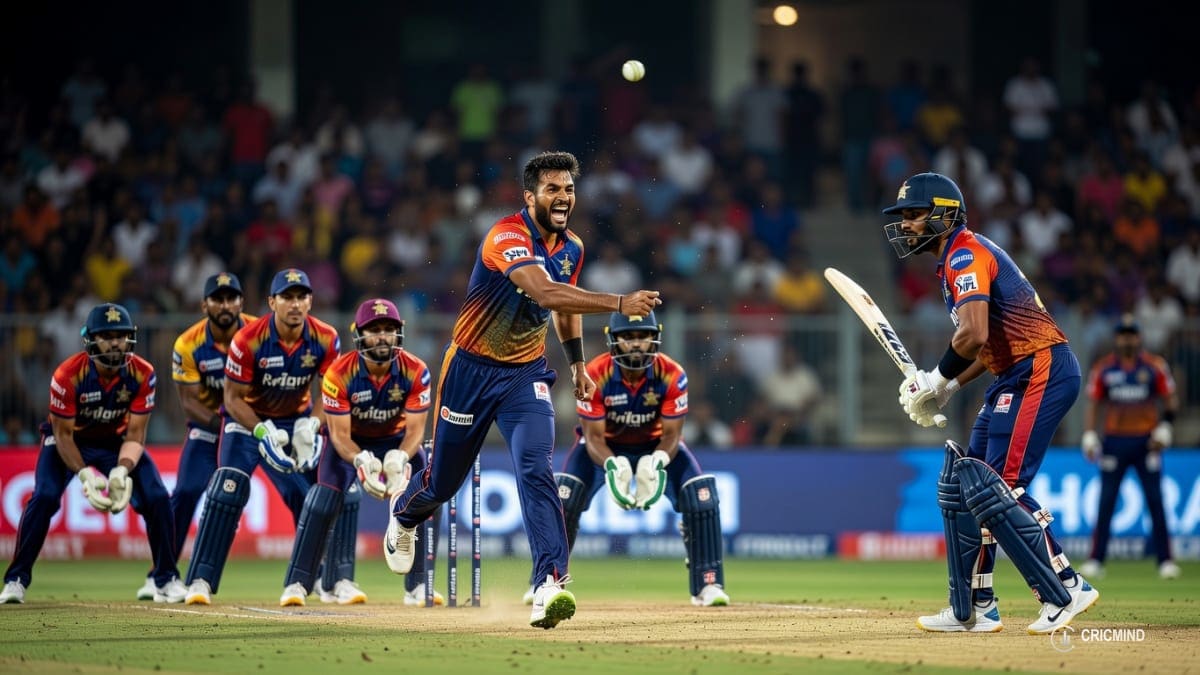
The Beginning: Dhoni's Coronation
When the Chennai Super Kings were awarded to Chennai-based India Cements in the 2008 IPL auction, nobody was fully prepared for what that franchise would become. The price was $91 million — significantly above most valuations at the time. The star player attached was MS Dhoni, who had won the 2007 ICC World Twenty20 with India just months earlier and was already the most commercially powerful cricketer in the country. Chennai had never previously had a cricket team of its own. It had a cricket culture built on long-form cricket, on watching Test matches in the 1980s and 1990s at the MA Chidambaram Stadium, on the traditions of Tamil Nadu cricket that had produced VB Chandrasekhar and WV Raman.
Chennai Super Kings did not ease themselves gently into the IPL. In their first season, they reached the final — beaten by Rajasthan Royals in a match that, in retrospect, helped define the franchise's temperament. They would become familiar with the final. They would play in nine IPL finals across the first sixteen editions of the tournament. They would win five of them. But before they could build their dynasty, they had to survive their disaster.
Building the Machine: 2008–2015
| Season | Result | Key player |
|---|---|---|
| 2008 | Finalist | MS Dhoni — captain, 414 runs |
| 2009 | Semifinalist | Matthew Hayden — 572 runs |
| 2010 | CHAMPIONS | Murali Vijay, Albie Morkel |
| 2011 | CHAMPIONS | Suresh Raina — 440 runs, 9 wickets |
| 2012 | Finalist | Mike Hussey — 538 runs |
| 2013 | Finalist | Faf du Plessis — 444 runs |
| 2014 | Finalist | Dwayne Bravo — 32 wickets |
| 2015 | Semifinalist | Brendon McCullum — 427 runs |
The statistics tell part of the story. From 2008 to 2015, CSK reached the final or the last four in every single season. This record of playoff consistency — never missing the knockout stage, never wasting a season on rebuilding — was achieved through an organisational discipline that the IPL had not previously seen at franchise level.
MS Dhoni's captaincy was the foundation, but attributing CSK's success entirely to Dhoni is to misread what the franchise built. Stephen Fleming as coach brought a New Zealand cricket culture of pragmatic decision-making that balanced Dhoni's own instincts. The auction strategy prioritised experience over youth — Mike Hussey, Matthew Hayden, Faf du Plessis, Albie Morkel — and it prioritised players who had demonstrated the ability to perform in high-pressure situations over players who had merely performed in ordinary ones.
The team's batting philosophy, under Dhoni, was one of controlled aggression: never panic in the powerplay if wickets fell, trust the middle-order, and build towards the final six overs when Dhoni himself would arrive. The bowling philosophy was based on variations rather than pace: Dwayne Bravo's slow bouncers and slower balls, Ravindra Jadeja (RR)'s economical left-arm spin, R. Ashwin's off-spin as a match-winning threat in the powerplay. CSK never needed to be the most exciting team in the tournament. They only needed to win.
The Fall: The 2015 Scandal and the Ban
In May 2015, the N. Srinivasan Committee of Administrators investigating the IPL spot-fixing scandal found that CSK CEO Gurunath Meiyappan had bet on IPL matches involving his own franchise. The Supreme Court of India, following the Lodha Committee's recommendations, banned both Chennai Super Kings and Rajasthan Royals from the IPL for two years — 2016 and 2017 — making them the first franchises in the tournament's history to face exclusion.
The ban was a seismic moment for IPL as an institution. CSK were not merely a successful franchise; they were the tournament's most commercially powerful brand outside Mumbai Indians. Their absence created two new franchises — Rising Pune Supergiant (for CSK players) and Gujarat Lions (for RR players) — and a collective emptiness in the competition that no amount of competitive cricket could fully fill.
For the CSK players, most of whom had been with the franchise for many years and had built genuine institutional loyalty, the two-year exile was disorienting. Dhoni played for Pune Supergiant. Raina, Jadeja, and others were distributed to other franchises. The identity that had been built so carefully over eight seasons was put into cold storage.
The Resurrection: 2018
The return was one of the great sporting moments in IPL history. When CSK came back for the 2018 season — with their players, their coaching staff, their yellow jerseys, and their aging squad that most observers considered well past its best — the narrative wrote itself too easily. The obvious prediction was a valiant but unsuccessful return, a team of veterans finding their age finally catching up with them.
What actually happened was a championship. CSK won the 2018 IPL title at their first attempt after the ban, beating Sunrisers Hyderabad in the final by eight wickets with eighteen balls remaining. It was the most comprehensive final victory in tournament history. Dhoni had turned 36. Shane Watson, recalled at the last minute, scored an extraordinary 117 not out in the final — playing through a series of physical ailments — that remains the defining individual final performance in IPL history.
The 2018 title had a specific emotional quality that IPL titles rarely achieve. It felt earned rather than won. The team had been through something — two years of exile, the judgement of courts, the question marks over the organisation's integrity — and had emerged with their identity intact and their competitiveness undiminished.
The Fifth Title and the Institutional Legacy
CSK's fifth title in 2023 — their second after the ban, which itself spoke to an astonishing second wind — confirmed what the 2018 title had suggested: that the franchise had transcended the individual careers of the players who built it. By 2023, Dhoni was thirty-seven and playing as a finisher rather than a middle-order anchor. Raina had retired from IPL cricket. The batting order was substantially different from the 2010s teams. And yet the culture — the calmness, the experience-over-exuberance philosophy, the trust in match-day intelligence over pre-planned execution — remained identical.
The most remarkable thing about Chennai Super Kings is not the five titles. It is the consistency of the approach across eighteen years and through a two-year ban. Franchises that face institutional crisis typically rebuild in erratic directions — signing different kinds of players, changing philosophies, hoping that change itself is the answer. CSK returned from their ban playing exactly the same kind of cricket they had played before it. In sport, that kind of institutional memory is extraordinarily rare.
What CSK Means to Chennai
In cities across India, IPL franchise identity competes with national cricket identity for fan loyalty. In Chennai, it does not. CSK are not merely the city's team; they are the city's primary sporting identity. The yellow of the CSK jersey is visible across Chennai in April and May in a way that has no equivalent elsewhere in Indian franchise sport. The yellow brigade that follows the team to away matches, the Whistle Podu chant that has become a genuine cultural artefact — these are not marketing constructs. They are the organic expressions of a city that found its sporting identity in the franchise and has never let go.
FAQ
Q: Why were CSK banned from the IPL?
A: Chennai Super Kings and Rajasthan Royals were banned from the IPL for the 2016 and 2017 seasons following the Supreme Court of India's acceptance of the Lodha Committee report, which found that CSK's CEO Gurunath Meiyappan had engaged in betting on IPL matches involving his own franchise.
Q: How many IPL titles has CSK won?
A: Chennai Super Kings have won five IPL titles — in 2010, 2011, 2018, 2021, and 2023 — equalling Mumbai Indians as the most successful franchise in IPL history by number of titles.
Q: What happened to CSK players during the two-year ban?
A: During the 2016 and 2017 seasons, the CSK players were distributed across two new franchises — Rising Pune Supergiant (which included MS Dhoni) and Gujarat Lions (which included other CSK players). Both franchises were dissolved when CSK returned in 2018.
Q: Who scored the most memorable innings in a CSK IPL final?
A: Shane Watson's 117 not out in the 2018 IPL final against Sunrisers Hyderabad is widely considered the greatest CSK final performance. Watson was reportedly struggling with physical injuries throughout the innings, which took him from the opening over to the winning boundary.
Q: Who has captained CSK in the IPL?
A: MS Dhoni has captained CSK for virtually their entire IPL existence. Virat Kohli deputised briefly in Dhoni's absence in early seasons, and Ravindra Jadeja (RR) briefly held the captaincy for part of IPL 2022 before Dhoni returned to lead the team mid-season.