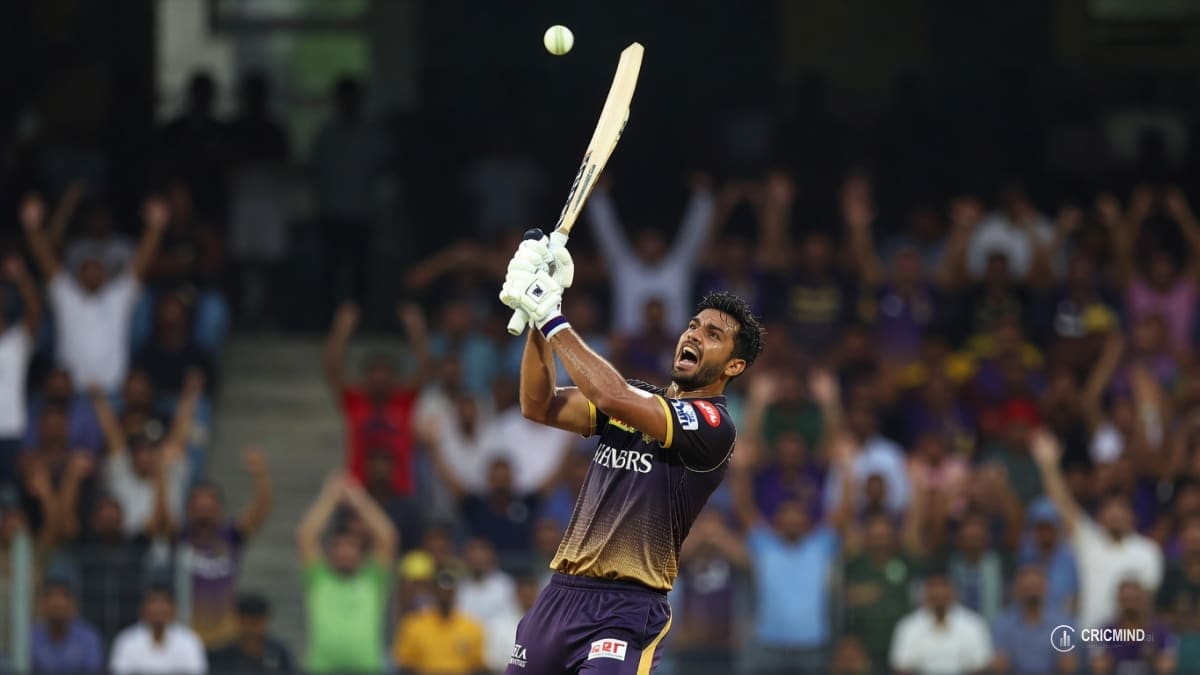
Travis Head: The Left-Handed Destroyer Who Rewrote IPL Powerplay History
By Meera Chandrasekaran, International Cricket Desk
The IPL has seen many openers who arrive with reputations. Very few of them arrive and immediately become the most discussed batting phenomenon in the tournament's history. Travis Head managed it within four games of his IPL debut.
By the time the 2024 season was complete, Head had produced the highest individual strike rate in an IPL season for any opener who batted a minimum of 200 balls — a figure so far above the previous record that the statisticians checking it queried their own databases. He had been involved in three century powerplay partnerships. He had made the first six overs of an SRH innings an event that cricket fans structured their evenings around in the way they once structured them around Brian Lara at Barbados.
The Powerplay Record — Understanding the Magnitude
Head's IPL 2024 powerplay numbers deserve to be read slowly, because the numbers are almost surreal in context:
- Powerplay innings: 14 across all group stage and knockout games
- Powerplay runs: 436 from those innings
- Powerplay balls faced: 247
- Powerplay strike rate: 176.5
A powerplay strike rate of 176.5 across a full IPL season — not a hot streak, not two exceptional games, but a sustained average across fourteen innings — is categorically different from anything seen before in IPL cricket at opener. Rohit Sharma's best IPL powerplay season was in the 140s. KL Rahul's best was 152. Head made those look conservative.
What this means practically: in six overs of facing Head's bat, a bowling attack could expect to concede, on average, between 58 and 65 runs. SRH teams built around this.
The Left-Hander's Specific Genius
Head's left-handedness is a tactical asset amplified by his specific shot selection. The three shots that make him most dangerous in the powerplay are:
The inside-out drive: Head generates an inside-out off-drive against left-arm bowling and right-arm over-the-wicket pace that travels in the corridor between extra cover and deep cover point. It requires perfect timing and a willingness to attack the line of the ball rather than its direction; Head plays it with the casual confidence of someone hitting throwdowns in the nets.
The ramp: His ramp over the wicketkeeper is not merely a shot — it is a statement of intent that tells the bowler there is no length that is safe. Short balls get pulled; full balls get driven; good-length balls get ramped. The category of "safe ball" does not exist in Head's taxonomy.
The slog-sweep against pace: Head plays an aggressive slog-sweep against pace bowling that most coaches would have drilled out of a young batter. Against 135-140 km/h deliveries on middle stump, it goes over midwicket. Against deliveries angled in, it disappears over square leg. It is not a percentage shot — it is a shot that exists specifically to destroy the field settings that have been prepared for the conventional left-hander.
The World Cup Credentials
Head's IPL aggression is validated by his World Cup record, which is where the highest pressure is calibrated. In the 2023 ODI World Cup final against India, Head made a hundred in a match that Australia won against the strongest possible opposition in front of the largest crowd in the stadium's history. In the 2024 T20 World Cup, he was one of Australia's most important top-order contributors.
These are not comfortable conditions in which to produce spectacular batting. They are the exact conditions that reveal whether a batter's IPL numbers are translatable or are merely the product of franchise cricket's high-scoring environments. Head's international record confirms the translation is real.
The SRH Partnership Machine
Head's partnership with Klaasen at SRH created something specific: a batting combination in which neither batter needed to pace the innings. Most opening partnerships require one batter to consolidate while the other attacks; Head-Klaasen created a template where both attack simultaneously, trusting the other to carry the innings if one falls cheaply.
This required a shared philosophy of batting that went beyond individual skill. It required trust — the understanding that if Head falls for 8 in the first over, Klaasen will not suddenly become defensive to compensate, and vice versa. Building that trust took approximately two games. By their third partnership, it looked like they had been opening together for years.
IPL 2026 — What Changes, What Doesn't
The bowlers have studied Head extensively since IPL 2024. The analysis suggests three vulnerability zones: a) the wide outside-off ball above 140 km/h in the first two overs before he is fully set; b) the back-of-a-length ball on his ribs (not short enough to pull, not full enough to drive freely); c) variations that come in rather than going away, exploiting his tendency to commit to the drive before the ball has fully shaped.
None of these vulnerabilities amounts to a plan — they are areas of marginal risk, not reliable dismissal methods. In IPL 2026, every bowling coach who faces SRH will have a "Head plan"; whether those plans survive contact with Head in full flow is a different question.
Frequently Asked Questions
What was Travis Head's strike rate in IPL 2024?
Head's overall IPL 2024 strike rate was above 190, with a powerplay strike rate of approximately 176 — the highest sustained powerplay rate by an opener in IPL history.
Which team does Travis Head play for in the IPL?
Travis Head plays for Sunrisers Hyderabad (SRH), where he has been their primary overseas opener since IPL 2024.
What is Travis Head's nationality?
Head is Australian. He plays Test and white-ball cricket for Australia and is considered one of the most important batters in Australia's short-format plans.
Has Travis Head won the IPL?
As of IPL 2025, Head has not won the IPL. SRH reached the final in 2024 but lost. His first IPL title remains the primary professional target at franchise level.
How does Travis Head prepare for IPL after the Australian summer?
Head arrives in India from the Australian summer (October-March) having played Test, ODI, and BBL cricket. His white-ball rhythm from the BBL is considered a key factor in his ability to perform immediately in IPL conditions without a transition period.