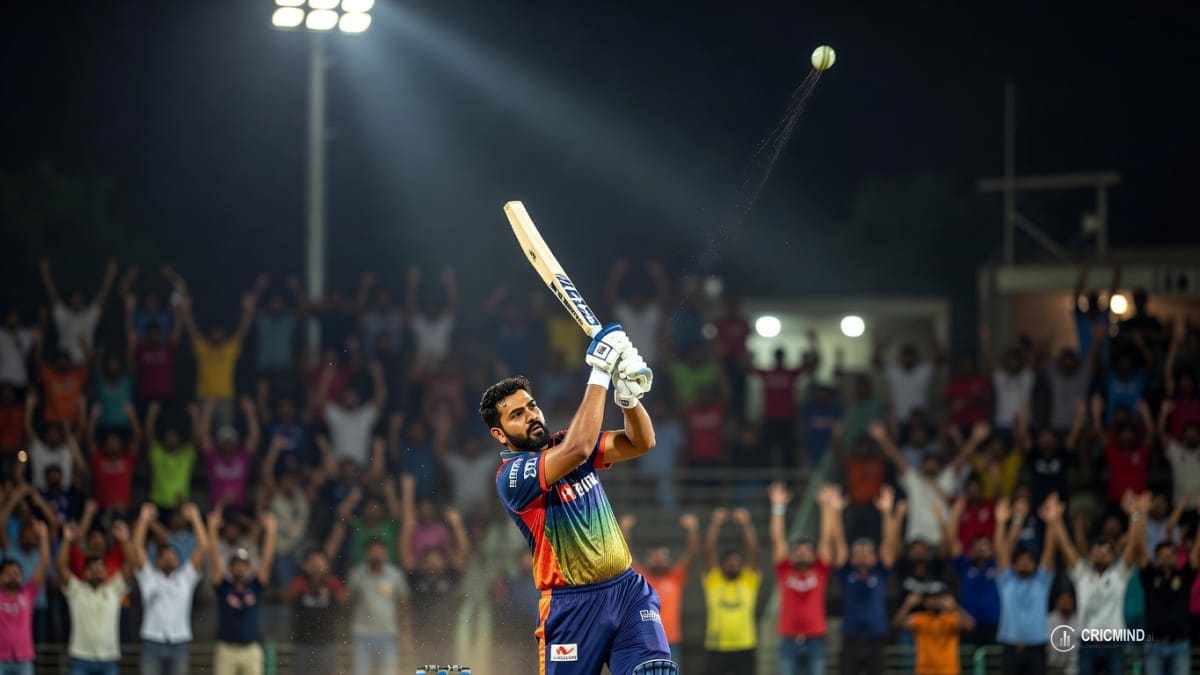
The Question That Divides a Nation
Every IPL season, two names rise above the noise. Not always because their teams are winning — though one of them certainly has — but because they represent something larger than cricket. Rohit Sharma and Virat Kohli are the twin poles of Indian cricket's universe, and nowhere has their rivalry been more contested, more layered, and more emotionally charged than in the captaincy debate.
This is not a question about who bats better. It is a question about leadership, legacy, and what it actually means to build a dynasty in the most competitive T20 league on earth. The data is in. The trophies have been handed out. It is time to settle this.
The Trophy Cabinet: Where the Argument Begins and, for Many, Ends
Let us not bury the headline. Mumbai Indians have won five IPL titles — 2013, 2015, 2017, 2019, and 2020. Royal Challengers Bangalore waited until 2025 to win their first, and by that point Kohli had long since relinquished the captaincy.
That single fact has defined this debate for years. Rohit Sharma captained MI to each of those five titles. He built a culture, retained a core, and delivered when it mattered most. His win record across 277 matches stands at a 54.5 percent win rate. That is the foundation of his argument — and it is an extraordinarily strong one.
Kohli, meanwhile, captained RCB across a stretch that included three final appearances — in 2009, 2011, and 2016 — without ever lifting the trophy. His team's overall win rate sits at 45 percent across 264 matches. The numbers tell a story of near-misses and what-ifs that have haunted Bangalore's faithful for nearly two decades.
| Metric | Rohit Sharma (MI) | Virat Kohli (RCB) |
|---|---|---|
| Matches | 277 | 264 |
| Wins | 151 | 119 |
| Losses | 122 | 139 |
| Win % | 54.5% | 45.0% |
| IPL Titles | 5 | 0 |
| Finals Reached | 6+ | 3 |
What the Numbers Cannot Capture About Kohli
Here is where the honest analyst has to pause. Reducing Kohli's captaincy to a zero in the titles column misses something essential about what he did in Bangalore — specifically in 2016, the season that remains one of the greatest individual performances in IPL history.
That year, Kohli scored 973 runs in a single season — a number so extraordinary it has not been approached since. He carried a team that, on paper, had no business reaching a final, all the way to the championship match. RCB finished runners-up, beaten by Sunrisers Hyderabad. His batting that season was not merely captaincy by example. It was captaincy as a force of nature.
As a batter in the IPL across 259 matches, Kohli has scored 8,671 runs at an average of 39.59 with 63 fifties and 8 hundreds. His highest score is 113 not out. He has won 19 Player of the Match awards — singular performances that repeatedly kept his franchise alive in seasons where the bowling attack offered precious little support.
Rohit, across 266 matches, has scored 7,048 runs at an average of 29.86, with 47 fifties and 2 hundreds. His highest is 109 not out. He has earned 21 Player of the Match awards — marginally more, which reflects the explosive impact he routinely had at the top of the order.
| Batting Metric | Rohit Sharma | Virat Kohli |
|---|---|---|
| Matches | 266 | 259 |
| Runs | 7,048 | 8,671 |
| Average | 29.86 | 39.59 |
| Strike Rate | 132.06 | 132.93 |
| Fifties | 47 | 63 |
| Hundreds | 2 | 8 |
| POTM Awards | 21 | 19 |
The batting numbers belong convincingly to Kohli. He made more runs, scored them more consistently, and converted them into match-winning innings far more regularly. But a captain is not judged on his own batting card. He is judged on what he builds around him.
Building a Dynasty vs. Fighting Alone
This is the crux of the argument, and it deserves intellectual honesty rather than tribal loyalty.
Rohit Sharma had extraordinary assets at Mumbai Indians. Jasprit Bumrah — 186 wickets from 145 matches at an economy of 7.12 — gave MI a death-bowling weapon that no other franchise could replicate. Lasith Malinga delivered 170 wickets at a staggering average of just 19.46 across his MI career. Kieron Pollard, Hardik Pandya, Suryakumar Yadav — Rohit led squads with genuine depth on multiple fronts.
But here is the counter: building those squads, retaining those players through auction cycles, and extracting peak performances from them across multiple seasons required leadership intelligence. The MI system did not run itself. Rohit was central to the culture — calm under pressure, tactically astute, and capable of absorbing the chaos that T20 cricket generates and converting it into composed decision-making.
Kohli, by contrast, spent much of his captaincy tenure propping up a franchise whose bowling attack bordered on charitable. The names behind him shifted season after season. He had AB de Villiers — one of the most brilliant T20 batters ever, with 5,181 runs at a strike rate of 151.89 and the most Player of the Match awards in IPL history with 25 — but the bowling cupboard was rarely stocked to the same standard as MI or Chennai Super Kings.
That context matters. You cannot fully credit a captain for winning with superior resources, nor can you fully blame one for losing with inferior ones.
The Intangibles: Composure, Culture, and Clutch Moments
Rohit Sharma's most underrated quality as a captain is his serenity. He fields changes are made without visible panic, his bowlers are given extended spells when the moment demands it, and he has an almost preternatural ability to read the game from mid-on. The five MI titles were not all dominant victories — several were won by margins that required precise captaincy under pressure, including the 2019 title where MI beat Chennai Super Kings in a final decided in the last over.
Kohli's captaincy was emotional by design. He wore the team's fortunes on his sleeve, and there were seasons when that intensity galvanised RCB into performances that exceeded their talent level. But there were others where it became a burden — visible frustration, missed chances to rotate the bowling, and a team that sometimes played as if managing their captain's emotions was part of the job description.
Neither approach is inherently superior. But results, ultimately, are what captaincy is measured by.
The Verdict
| Category | Rohit Sharma | Virat Kohli |
|---|---|---|
| IPL Titles | 5 | 0 |
| Win Rate | 54.5% | 45.0% |
| Batting Average as Captain | 29.86 | 39.59 |
| Individual Contribution | Good | Exceptional |
| Dynasty Building | Yes | No |
| Resources Available | Strong | Moderate |
| Final Appearances | Multiple | 3 |
Rohit Sharma is the greater IPL captain. That sentence comes with full acknowledgment of everything [Virat Kohli](/players/virat-