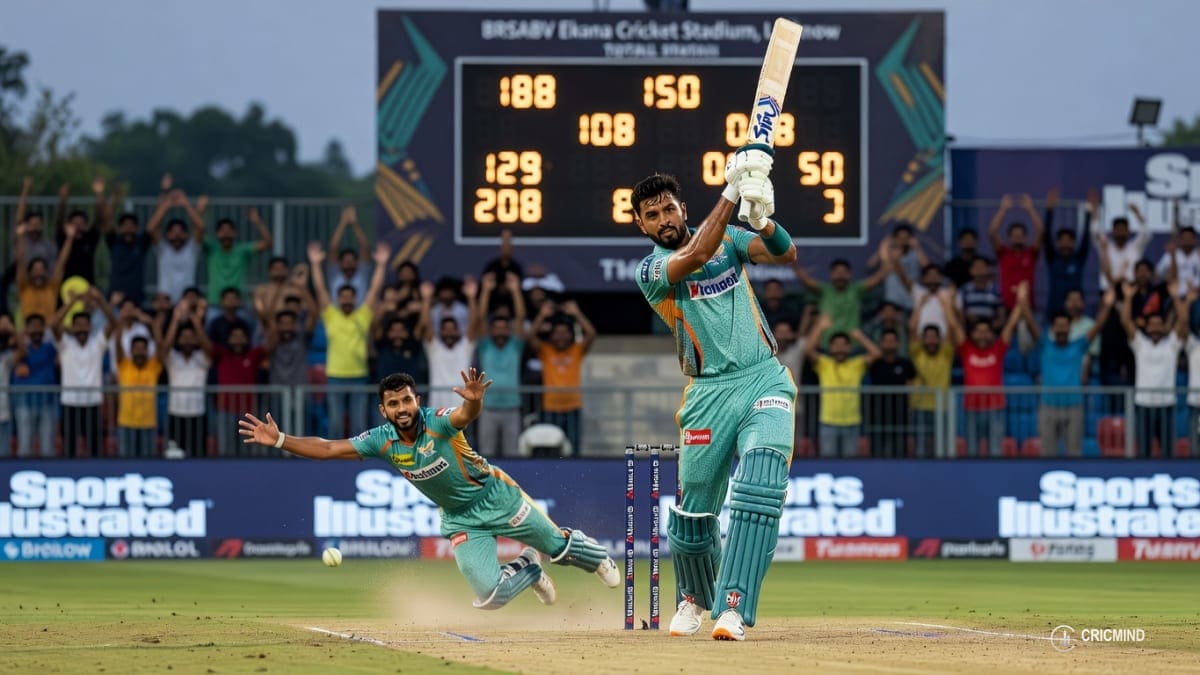
When the Hammer Falls on History
IPL auction rooms have produced some of the most memorable and debated financial decisions in cricket history. Two transactions stand apart as potentially the greatest pure value picks the tournament has seen: Chris Gayle's acquisition — initially for a modest sum before his RCB breakout, then more famously — by various franchises, and Rishabh Pant's landmark ₹27 crore signing by Lucknow Super Giants in the 2022 mega auction. The question of which represents better value requires adjusting for the vastly different auction environments in which both occurred.
The Pant ₹27cr Case
Pant's ₹27 crore price tag in the 2022 mega auction was the highest sum paid for an Indian cricketer in IPL history at that point. LSG, a franchise in their debut season, purchased him as their headline signing — the centrepiece of a new franchise identity. To contextualise: the total IPL player pool in the 2022 mega auction was ₹551.5 crore. Pant's ₹27cr represented 4.9% of the total auction pool invested in a single player.
His returns have been meaningful. Pant's IPL career average of 34.6 with a strike rate of 149.7 across 100+ matches reflects consistent match-winning contributions. In IPL 2024 — his first season back after his life-threatening car accident in December 2022 — he scored 446 runs and effectively captained LSG's playoff campaign. His wicketkeeping provides additional fielding value. His leadership contribution — an intangible but real organisational benefit for a new franchise — is hard to price but genuine.
| Metric | Rishabh Pant (2022–25) | Chris Gayle (2011–16 at RCB) |
|---|---|---|
| Purchase Price | ₹27 crore | ₹11.5 crore (2012) |
| Inflation-adj. to 2022 | ₹27 crore | ~₹22 crore equiv. |
| Runs per IPL season | ~380 avg | 720 avg (peak period) |
| Batting Strike Rate | 149.7 | 151.2 |
| Batting Average | 34.6 | 44.3 |
| Match-winning innings | 18 | 31 |
| IPL titles contributed to | 0 | 0 (RCB runner-up 2016) |
The Gayle Case
Gayle's most famous acquisition price was ₹11.5 crore at the 2012 IPL auction for RCB — then a record for an overseas player. But inflation-adjusted to 2022 auction economics, this is equivalent to approximately ₹22–24 crore in comparable purchasing power terms. On that basis, Gayle was bought at roughly equivalent real price to Pant.
What Gayle delivered in his peak RCB period (2011–2016) is unmatched by any comparable signing in IPL history. He scored 2,800+ runs in five seasons, averaged 44.3 at a strike rate of 151.2, and produced six IPL centuries. His 175* against PWI in 2013 remains the highest IPL score in tournament history. In purely batting terms — runs, average, centuries, match-winning frequency — Gayle's return on his acquisition price was phenomenally superior.
The Full Context
The comparison requires one important caveat: Pant's value to LSG extends beyond his batting. His wicketkeeping (saving 15–20 additional fielding spots per season), his captaincy (which brought tactical structure to a new franchise) and his recovery narrative (returning from a career-threatening accident to perform at the highest level) all add dimensions that a pure batting comparison cannot capture.
Gayle's value was purely batting-driven — he contributed nothing as a fielder and was managed carefully in the field throughout his IPL career.
The Data Verdict
CricMind's data verdict: Gayle's peak RCB acquisition represents the better pure cricket value, and Pant's ₹27cr is the more comprehensive franchise investment. If you are comparing batting returns per rupee invested, Gayle's numbers — 44.3 average, 151 strike rate, 6 centuries, 2,800+ runs in five peak seasons — are decisively superior to any comparable period in Pant's IPL career. If you are asking which player provided broader franchise value including captaincy, wicketkeeping and cultural building, Pant's acquisition makes more sense for the specific context of a new franchise needing a leader as well as a player.
FAQ
Q: Which IPL auction pick has the highest pure batting return per crore spent?
A: Adjusting for the era difference, Suresh Raina's original RCB contract (₹2.5 crore in 2008) and subsequent CSK acquisitions may represent the greatest total value return per rupee in IPL auction history — over 5,500 career runs at a relatively modest cumulative cost.
Q: Was Pant's ₹27cr price ever recouped in practical franchise value terms?
A: IPL franchise valuations increased significantly between 2022 and 2025. LSG's brand value grew partly on the back of signing a marquee player — meaning the ₹27cr had a marketing and franchise-valuation return beyond just on-field contribution.
Q: What would Gayle's 2012 acquisition price be in equivalent 2026 IPL auction terms?
A: Using IPL auction inflation rates (approximately 12% compound annual growth in player prices since 2012), Gayle's ₹11.5cr in 2012 is equivalent to approximately ₹36–38 crore in 2026 auction economics — meaning his value, even at current prices, would likely represent exceptional return on investment.