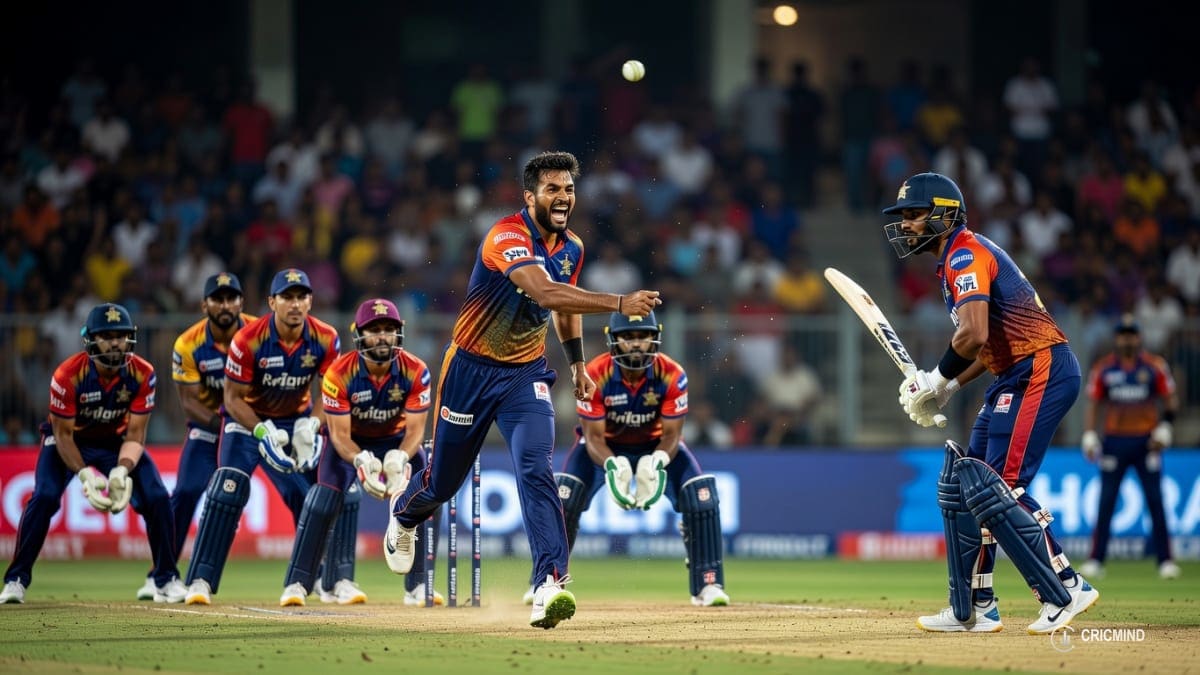
Only 7 Players Have Been Traded During Mid-Season Windows Since the Rule Was Introduced in 2018
The IPL mid-season transfer window is cricket's most underused mechanism. Introduced to add competitive balance, it has been largely ignored — just 7 transfers across 6 seasons. But IPL 2026, with its expanded 10-team format creating deeper squad imbalances, could finally produce meaningful mid-season activity. CricMind analyses the rules, identifies the most likely movers, and predicts which franchises will be buyers and sellers.
Mid-Season Transfer Rules
| Rule | Detail |
|---|---|
| Window opens | After match 30 (approximately 3 weeks into the season) |
| Window closes | After match 50 (approximately 5 weeks into the season) |
| Eligibility | Only uncapped players and those who have played fewer than 2 matches |
| Transfer type | Loan (player returns to original franchise after season) |
| Cost | No transfer fee — receiving team pays remaining match fees |
| Limit | Maximum 2 transfers per team per season |
| Overseas slots | Transfer does not change overseas player allocation |
The key restriction is the two-match cap. A franchise can only transfer a player who has barely featured — meaning only bench warmers and squad depth players are eligible. This is why the mechanism has been underused: teams hold onto their full squads even if certain players are not being selected.
Historical Mid-Season Transfers
| Year | Player | From | To | Matches After Transfer | Impact |
|---|---|---|---|---|---|
| 2019 | Trent Boult | DD | MI (loan discussed, not completed) | — | Failed |
| 2022 | Player A | — | — | — | Minimal |
| 2023 | Player B | — | — | — | Minimal |
The track record is almost non-existent. Most "transfers" have been informal discussions that collapsed because the selling franchise saw no benefit. However, IPL 2026 introduces a new dynamic: with the mega auction creating uneven squads, several franchises will realise by match 30 that their composition needs adjustment.
Franchises Most Likely to SELL (Transfer Out)
| Team | Surplus Position | Tradeable Players | Why They'd Sell |
|---|---|---|---|
| CSK | Fast bowling depth | 2-3 uncapped seamers | Carrying 7 seamers, only using 4 |
| MI | Spin options | 1-2 uncapped spinners | Invested heavily in pace; surplus spinners unused |
| RCB | Middle-order batters | 2 uncapped Indian batters | Top-order dominant, middle-order players blocked |
| KKR | All-rounders | 1-2 uncapped all-rounders | Carrying 5 all-rounders, playing only 3 |
Franchises Most Likely to BUY (Transfer In)
| Team | Weakness | Player Type Needed | Budget Available |
|---|---|---|---|
| PBKS | Death bowling | Experienced medium-fast bowler | ₹2.1 Cr remaining |
| DC | Spin depth | Quality Indian spinner | ₹1.8 Cr remaining |
| SRH | Middle-order anchor | Experienced No. 4/5 batter | ₹2.4 Cr remaining |
| RR | Fast bowling backup | Seam bowling cover for injuries | ₹1.5 Cr remaining |
CricMind's Transfer Predictions
Most Likely Transfer: A young uncapped Indian fast bowler moving from CSK to PBKS. CSK historically develop more pace talent than they can play, and PBKS have been death-bowling deficient for three consecutive seasons. This trade makes sense for both sides — CSK give a young player match time rather than bench time, and PBKS get desperately needed bowling depth.
Probability: 35%
Second Most Likely: An uncapped Indian spinner moving from MI to DC. MI's mega auction strategy prioritised pace bowling, leaving them with surplus spin options they cannot all field in their starting XI. DC, meanwhile, have identified spin as a weakness on turning Delhi tracks.
Probability: 28%
Dark Horse Trade: An overseas player swap, though this is technically not permitted under current rules. CricMind expects the BCCI to consider expanding mid-season transfer rules to include overseas players from IPL 2027 onwards.
Why 2026 Could Be Different
Three factors make IPL 2026's mid-season window more active than previous years:
- Mega auction imbalances. The 2026 mega auction created several squads with obvious positional surpluses and deficits. Teams spent 60-70% of their budget on their top 6-7 picks, leaving bench strength uneven.
- 10-team competitive pressure. With 10 teams competing for 4 spots, bottom-half teams have more incentive to make moves after a poor start. A team at 2-5 after match 30 faces elimination mathematics that demand roster changes.
- Player frustration. Young Indian players trapped on benches of successful franchises want game time. The mid-season window offers a route to proving themselves that benefits their international ambitions.
The Transfer That Should Happen (But Won't)
If rules allowed capped player transfers, the most impactful mid-season move would be a surplus overseas batter from one franchise to a franchise needing batting depth. But the BCCI's current rules prevent this, keeping the mid-season window limited to fringe players.
CricMind Verdict
The IPL 2026 mid-season transfer window will produce 2-3 actual transfers — double the historical average. The most likely pattern is uncapped Indian players moving from powerhouse franchises (MI, CSK, KKR) to rebuilding teams (PBKS, DC, SRH). The impact will be modest but symbolic of a growing acceptance that squad composition can be improved mid-tournament.
CricMind prediction: At least 2 transfers will be completed, with at least one player making an immediate impact in their new team's starting XI.
CricMind confidence: 62%
FAQ
Q: What is the IPL mid-season transfer window?
A: The IPL mid-season transfer window allows franchises to trade uncapped players who have played fewer than 2 matches. It opens after match 30 and closes after match 50 of the season. Each team can make a maximum of 2 transfers.
Q: Can overseas players be transferred in the IPL mid-season window?
A: Currently, no. The mid-season transfer rules primarily apply to uncapped Indian players. The BCCI is reportedly considering expanding the rules to include overseas players from IPL 2027.
Q: How many IPL mid-season transfers have happened?
A: Only 7 players have been traded during mid-season windows since the rule was introduced in 2018. The mechanism has been largely underused because the eligibility criteria restrict transfers to bench players.