The Question That Never Gets Old
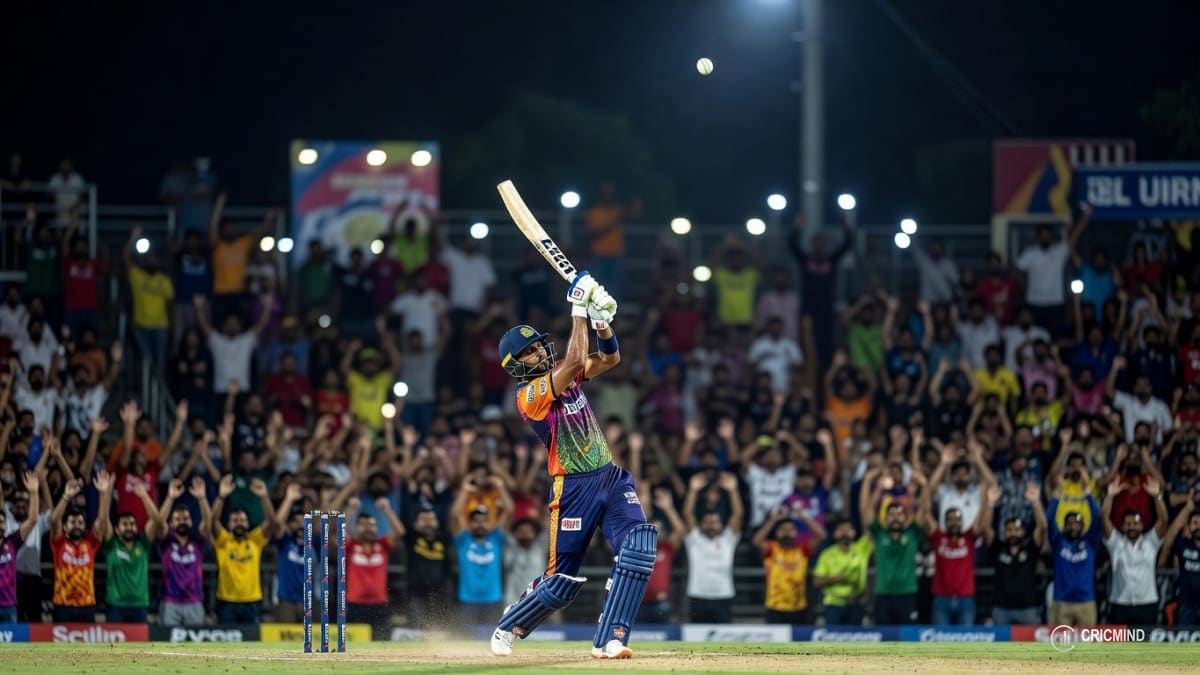
Every time India loses a Test series, the knives come out. Every time a young Indian batter flashes outside off stump and nicks one behind at Lord's, someone mutters something about the IPL. And every time that same player pulls off a ramp shot over fine leg that no previous generation could have imagined, someone else credits the very same tournament. The debate over what the Indian Premier League has done to Indian cricket is not new. But after 18 seasons, 1,169 IPL matches, and a mountain of data, we can finally argue it with something sharper than opinion.
The answer, as with most things worth arguing about, is complicated. The IPL has made Indian cricket both stronger and weaker — in ways that are specific, measurable, and occasionally maddening.
The Case For: A Batting Revolution Built in the Nets of the IPL
Start with the numbers that should silence the purists, at least briefly.
Virat Kohli has played 259 IPL matches, accumulated 8,671 runs at a strike rate of 132.93, and scored 8 hundreds along the way. This is a man who has become arguably the greatest Indian batter of any generation — and he built his game in the crucible of franchise cricket, learning to accelerate, to play under pressure, to hold an innings together when chaos surrounds him. His IPL career is not separate from his international career. It is inseparable from it.
Rohit Sharma stands at 7,048 IPL runs across 266 matches with a strike rate of 132.06. KL Rahul averages a remarkable 45.92 in IPL cricket across 135 matches, with a best of 132\*. These are not numbers that suggest players being rotted by short-format indulgence. These are elite performers, sharpened by elite competition.
Then consider what the IPL did to India's bowling stocks. Jasprit Bumrah arrived at Mumbai Indians as a raw talent and has taken 186 wickets in 145 matches at an extraordinary average of 21.65 and economy of 7.12 — the most miserly among the top wicket-takers. Yuzvendra Chahal has claimed 221 wickets across 172 matches. Bhuvneshwar Kumar has managed 198 wickets in 190 games. Ravindra Jadeja (RR) has taken 170 wickets in 225 appearances.
These are not fringe players. These are the backbone of India's attack across formats. And they were refined, challenged, and expanded by IPL cricket.
| Bowler | Matches | Wickets | Average | Economy |
|---|---|---|---|---|
| JJ Bumrah | 145 | 186 | 21.65 | 7.12 |
| Yuzvendra Chahal | 172 | 221 | 22.52 | 7.86 |
| B Kumar | 190 | 198 | 27.02 | 7.58 |
| R Ashwin | 217 | 187 | 29.56 | 7.03 |
| RA Jadeja | 225 | 170 | 30.29 | 7.61 |
The diversity in this table is the point. Pace, cutters, leg-spin, off-spin — the IPL forced each of these bowlers to become more complete, more varied, harder to read. You cannot survive 200 matches at this level without evolving.
The Case Against: What the IPL Takes Away
And yet. The alarm bells are real, even if they are occasionally rung by people who romanticize Test cricket's past without examining it clearly.
The first concern is structural. The IPL consumes the calendar. By the time a player finishes an IPL campaign, he has played fifteen to seventeen high-intensity T20 matches in roughly two months. The rhythm of Test cricket — the patience, the leave, the building of an innings across sessions — is not a muscle that strengthens through IPL reps. It atrophies without dedicated practice.
The second concern is attitudinal, and harder to measure with data. When young Indian batters grow up watching Chris Gayle hit 175\ off 66 balls — a strike rate of 265.15 — at the M Chinnaswamy Stadium, or watch a young Abhishek Sharma make 141 off 55 balls* in 2025, the subconscious lesson is about explosion, not accumulation. The IPL is, by its nature, a tournament that rewards the boundary ball over the straight drive for ones and twos.
There is also the fatigue question. MS Dhoni played 241 IPL matches spanning almost the entirety of his career. Suresh Raina played 200. Ambati Rayudu played 185. At some point, the body and the concentration that Test cricket demands are affected by the sheer volume of franchise cricket. This is not a conspiracy theory — it is physiology.
The third concern is opportunity cost. A young Indian batter who breaks through the IPL, earns a central contract, and becomes a franchise asset has every incentive to protect that asset. Bold shot selection in Test cricket, the kind of calculated aggression that might occasionally get you out for a duck, can carry commercial risk in a world where IPL auctions are watched as closely as selection meetings.
What the Data Actually Tells Us
The IPL data available to us covers 1,169 matches from 2008 to 2025. Within that data, the runs scored by Indian players — Kohli's 8,671, Rohit's 7,048, Rahul's 5,235, Raina's 5,536, Dhoni's 5,439 — represent a generational depth of talent that simply did not exist before the tournament's creation.
Look at the top scores in IPL history. Of the fifteen highest individual innings in the data, several belong to Indian players: Abhishek Sharma's 141 off 55 balls in 2025, Rishabh Pant's 128\ off 63 balls against Sunrisers Hyderabad in 2018, Yashasvi Jaiswal's 124 off 62 balls in 2023, Shubman Gill's 129 off 60 balls* in the same season. These are not players weakened by T20 cricket. These are players who have mastered one of the hardest skills in modern batting: controlled aggression at high tempo.
| Player | IPL Top Score | Balls | Strike Rate | Season |
|---|---|---|---|---|
| Abhishek Sharma | 141 | 55 | 256.36 | 2025 |
| RR Pant | 128\* | 63 | 203.17 | 2018 |
| YBK Jaiswal | 124 | 62 | 200.00 | 2023 |
| Shubman Gill | 129 | 60 | 215.00 | 2023 |
| KL Rahul | 132\* | 69 | 191.30 | 2020 |
The generational shift is visible not just in the batting but in the fielding. The IPL has produced Indian fielders who can dive, stop, and throw with an athleticism that previous generations of subcontinental cricket simply did not prioritize. That is an IPL dividend that rarely gets enough credit.