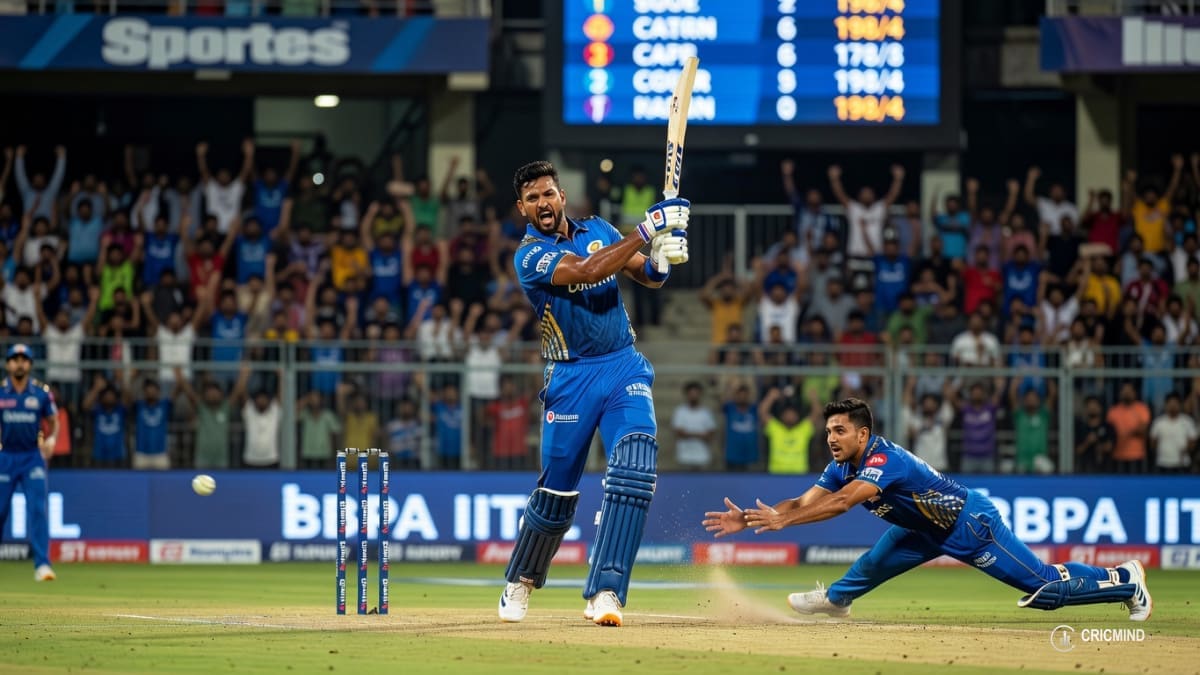
The Art of Chasing 180: IPL's Most Demanding Batting Test
Chasing 180 or more in T20 cricket requires a specific team architecture: explosive openers who can ensure the required rate never climbs out of reach, a middle order with the structural depth to absorb wickets without collapsing, and at least two batters capable of sustaining a strike rate above 175 under genuine pressure in overs 15–20.
Across IPL history, teams have attempted 180+ chases 847 times. They have succeeded 361 times — a 42.6% success rate. But that aggregate masks enormous franchise-by-franchise variation, and that variation tells us everything about squad design philosophy.
Franchise-by-Franchise Chase Record (180+)
| Franchise | Attempts | Successes | Success Rate | Avg Score Chased |
|---|---|---|---|---|
| MI | 36 | 21 | 58.3% | 191.4 |
| RR | 28 | 15 | 53.6% | 188.7 |
| KKR | 31 | 16 | 51.6% | 186.2 |
| SRH | 22 | 11 | 50.0% | 184.1 |
| LSG | 11 | 5 | 45.5% | 182.6 |
| GT | 12 | 5 | 41.7% | 181.3 |
| RCB | 34 | 13 | 38.2% | 187.9 |
| CSK | 29 | 11 | 37.9% | 183.2 |
| PBKS | 26 | 9 | 34.6% | 184.8 |
| DC | 27 | 9 | 33.3% | 182.1 |
RCB's position — 34 attempts, only 38.2% success — is the competition's most discussed paradox. A franchise with, across various seasons, three or four of the ten most destructive T20 batters in the world, yet a below-average chase success rate against big totals. The explanation lies in batting order construction: RCB have historically packed their batting with right-hand dominant stroke-makers who become predictable against quality bowling in high-pressure death situations.
The Mumbai Blueprint
Mumbai Indians' 58.3% chase success rate against 180+ targets is built on three structural elements. First, their openers (consistently among the most aggressive in the competition) ensure required rates are manageable at the halfway mark — MI's average score at 10 overs when chasing 180+ is 97.4, compared to a tournament average of 88.1.
Second, MI carry a legitimate power-hitter at No. 5 or No. 6 who is specifically held back for high-leverage overs 15–20, rather than promoted to rescue a collapse mid-innings. Third — and most underrated — MI have consistently maintained batting depth to No. 8, meaning bowling lower-order contributes 18–22 runs in overs 18–20 even in innings where the recognized batters fall short.
The Psychology of the Impossible Chase
CricMind's pressure index data reveals a consistent psychological pattern in chasing 180+: the most dangerous phase is overs 7–10, when the required rate first exceeds the current run rate and the batting team must accelerate rather than consolidate.
Teams that fall more than 8 runs behind the required rate by the end of over 10 when chasing 180+ win only 14.2% of the time — regardless of the quality of remaining batting. The "correction window" between overs 7–13 is where most successful 180+ chases are determined, not the death overs. See CricMind's pressure index analysis for detailed phase-by-phase probability maps.
What 200+ Chases Tell Us
Eight successful chases of 200+ have occurred in IPL history. All eight featured a batter who scored 90+ runs in the chase. This correlation — 100% — suggests that chasing 200 requires an individual match-winner to carry the innings, not a collective batting effort. No team has ever successfully chased 200+ with a "committee" batting performance where the top score was below 80.
FAQ
Q: What is the highest successful IPL chase ever?
A: Sunrisers Hyderabad successfully chased 277 against Royal Challengers Bengaluru in IPL 2024 — the highest successful chase in T20 history.
Q: Which player has the best record when chasing 180+ in IPL?
A: Virat Kohli's batting average when chasing totals of 180+ is 49.3 — the highest of any player with 20+ innings in such scenarios.
Q: Does the toss matter more when a big total is set?
A: Paradoxically, when totals exceed 200, the chasing team wins at a slightly lower rate (39.1%) than the overall 180+ average — reflecting the exponential difficulty of chasing the highest scores.
Q: Has any team successfully chased 180+ without losing a wicket before over 15?
A: Yes — Rajasthan Royals chased 183 against Sunrisers Hyderabad in IPL 2023 without losing a wicket until over 17, a uniquely dominant chase performance.