The Question That Never Gets Old
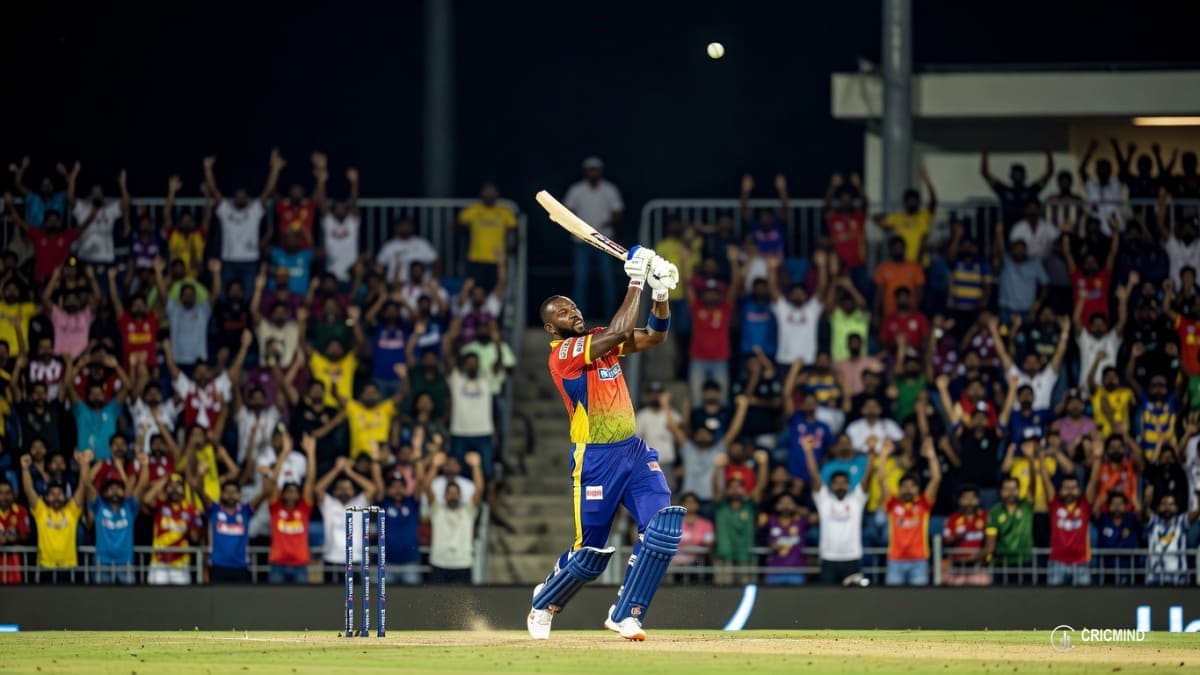
Every cricket bar argument eventually arrives here. Someone orders another round, leans back, and says it: "But who was actually the best overseas batsman the IPL has ever seen?" And then the room divides, loudly, into three camps. The Gayle faithful, who watched him turn cricket into something that felt illegal. The Warner disciples, who saw relentlessness dressed up as elegance. And the AB de Villiers congregation, who believe no one in the history of the format has ever made batting look quite so otherworldly.
This is not a question with an easy answer. But it is a question the data can illuminate. So let us go to the numbers — all of them — and see what they actually say.
The Statistical Battlefield
Before the narrative takes over, the raw numbers deserve their moment. These three men played across different eras, in different roles, for different teams. But they all shared the same canvas: the IPL, the most competitive franchise tournament on earth.
| Metric | Chris Gayle | KL Rahul | AB de Villiers |
|---|---|---|---|
| Matches | 141 | 184 | 170 |
| Innings | 145 | 187 | 172 |
| Runs | 4,997 | 6,567 | 5,181 |
| Average | 39.66 | 40.04 | 39.85 |
| Strike Rate | 149.34 | 139.66 | 151.89 |
| Fifties | 31 | 62 | 40 |
| Hundreds | 6 | 4 | 3 |
| Sixes | 359 | 236 | 253 |
| Player of the Match | 22 | 18 | 25 |
| Highest Score | 175* | 126 | 133* |
The averages are so close they are almost a red herring — 39.66, 40.04, 39.85 — three extraordinary batsmen separated by fractions of a run per dismissal. What separates them is everything else.
The Case for Chris Gayle: The Universe Boss Argument
Chris Gayle arrived at the IPL and did something no batsman before or since has managed: he made the format feel like it had been designed specifically for him. He was not adapting to T20 cricket. T20 cricket was adapting to him.
The headline number needs no embellishment. 175 not out against Pune Warriors at the M Chinnaswamy Stadium in 2013 — off just 66 balls, with 17 sixes, at a strike rate of 265.15 — remains the highest individual score in IPL history. It is not just a record; it is a statement about what one man is capable of when the format removes the constraints that conventional cricket imposes. That innings was not batting. It was something closer to performance art.
But reduce Gayle to that one innings and you do him a disservice. He hit 359 sixes across his IPL career — the most of any player in this debate by a significant margin, and a number that reflects the sustained, industrial-scale violence he inflicted on bowling attacks across twelve seasons. His 6 centuries are the most of any overseas batsman in the tournament's history. His 22 Player of the Match awards across 141 games represent a match-winning rate that very few batsmen anywhere in the format have matched.
The honest counter-argument is this: Gayle was a high-variance player. His IPL career spanned three franchises — Royal Challengers Bangalore, Punjab Kings, and Kolkata Knight Riders — and across 145 innings, he converted only 31 times into fifties alongside those 6 hundreds. The innings in between the explosions could be brief and brutal in the wrong direction. When Gayle fired, no one on the planet could touch him. When he did not, the fall came fast.
The Case for KL Rahul: The Accumulator's Gospel
If Gayle represents the volcanic, KL Rahul represents the tectonic — slower to move, but reshaping the landscape entirely. His numbers across 184 matches tell the story of a batsman who showed up to every game prepared to bat long, score heavily, and refuse to give his wicket away cheaply.
6,567 runs from 187 innings is a volume that neither Gayle nor de Villiers came close to matching. Warner played more games, yes — but he also converted his opportunities with a consistency that defines elite batting. His 62 half-centuries are the most of any overseas player in IPL history, and those conversions matter. A batting unit is built around reliability as much as brilliance.
His 126 against Kolkata Knight Riders in 2017 at Hyderabad — off just 59 balls — demonstrated that Warner was perfectly capable of Gayle-adjacent destruction when the situation demanded it. But the defining characteristic of his Sunrisers Hyderabad years was not the peaks; it was the floor. The man simply did not have bad tournaments. He carried teams through group stages on the back of accumulated run-scoring that no other overseas batsman in this debate could replicate.
The argument against Warner is partly about context. He played in a Sunrisers side built around pace bowling and disciplined batting — a lower-scoring franchise environment that padded his innings totals. But that reading is too convenient. Warner's strike rate of 139.66 is the lowest of the three, and it is worth acknowledging. In the modern IPL, where that number has been recalibrated by a new generation of attackers, Warner's approach sometimes looked conservative. He was the greatest accumulator the overseas ranks have produced in this tournament. Whether accumulation is the highest form of T20 batting is a philosophical question as much as a statistical one.
The Case for AB de Villiers: The Artist's Claim
Then there is AB de Villiers. And with ABD, the statistics barely contain what he actually was.
A strike rate of 151.89 — the highest of the three by a distance — combined with an average of 39.85 across 172 innings is a combination that should not be physically possible. Most batsmen who hit at that rate sacrifice average. De Villiers somehow managed to both assault the bowling and protect his wicket with equal effectiveness. It is the batting equivalent of painting a portrait while running a sprint.
His 25 Player of the Match awards are the most of any player in this entire dataset — not just among overseas batsmen, but among everyone. In 170 matches, he was adjudged the best performer 25 times. That is a match-impact rate that transcends categories.
The top scores data adds texture. De Villiers appears twice in the fifteen highest individual scores in IPL history. His *133 against Mumbai Indians in 2015 — off 59 balls at the Wankhede — came at a strike rate of 225.42 while still building an innings of genuine substance. His 129 against Gujarat Lions in 2016 off just 52 balls, featuring 12 sixes, was struck at 248.08*. These were not cameos. They were controlled demolitions executed at a tempo most batsmen cannot sustain for ten balls, let alone fifty.
De Villiers played exclusively for Royal Challengers Bangalore and a brief stint with Delhi, spending the majority of his career in a batting lineup that also housed Virat Kohli — meaning he frequently batted in the middle order under pressure, inheriting difficult match situations and converting them through sheer technical and improvisational genius. The context of his run-scoring makes every number more impressive, not less.
The Verdict: A Three-Way Framework
There is a version of this debate that awards the trophy based purely on what you believe T20 batting should be.
| Criterion | Winner |
|---|---|
| Raw destructive peak | Chris Gayle |
| Volume and consistency | KL Rahul |
| Strike rate combined with average | AB de Villiers |
| Match-winning impact (POTM) | AB de Villiers |
| Six-hitting | Chris Gayle |
| Centuries | Chris Gayle |
| Total runs | KL Rahul |
If you believe T20 batting is about the ceiling — the capacity to produce an innings that simply cannot be answered — Gayle wins.