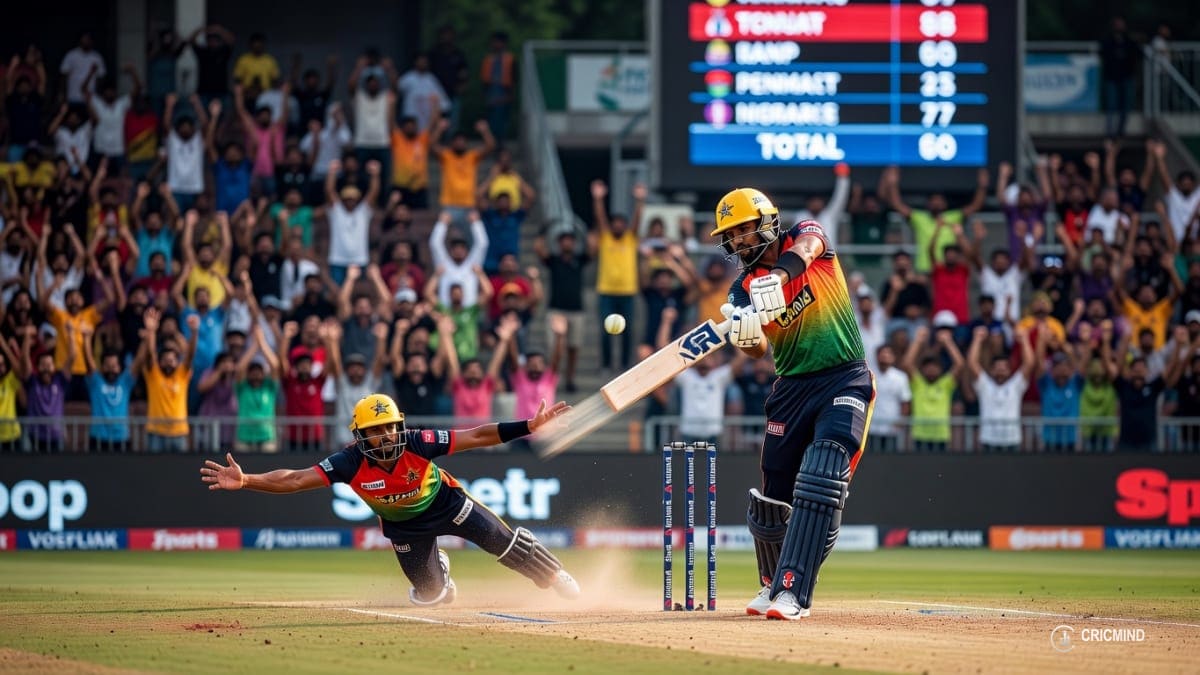
The Question Nobody Asks Enough
There is a moment in every IPL broadcast when a speed gun reading flashes across the screen and the commentary box erupts. The crowd roars. Social media lights up. A 150 kph delivery is, in the theatre of T20 cricket, its own kind of spectacle. But here is the question that cuts through the noise: does sheer pace actually translate into wickets, economy rates, and winning contributions, or is it merely the sport's most seductive illusion?
To answer that, CricMind.ai went deep into 1,169 IPL matches spanning 2008 to 2025, and what the data reveals is more nuanced, more fascinating, and frankly more instructive than any speed gun reading.
The Pace Bowling Landscape: What the Wicket Columns Actually Say
The first thing that stops you cold when you study IPL bowling records is who sits at the very top. Yuzvendra Chahal leads all-time wicket-takers with 221 wickets across 172 matches. Below him is Bhuvneshwar Kumar with 198 wickets, followed by Piyush Chawla and Sunil Narine both on 192. Not one of those four bowlers has ever been described primarily as an express pace threat.
This is not a small sample fluke. This is seventeen seasons of evidence telling a consistent story.
Among the genuinely fast bowlers in the data, Jasprit Bumrah stands as the most compelling case study. In 145 matches, he has claimed 186 wickets at a remarkable average of 21.65 — the best among any high-volume pace bowler in this dataset. His economy rate of 7.12 is elite. He has taken five-wicket hauls twice and four-wicket hauls three times. But the reason Bumrah tops pace bowling metrics is not speed alone. It is his combination of yorkers, cutters, and an action that defies the geometry of what a human arm should be able to do. He is fast, but he is not fast in a straight line.
Then there is Lasith Malinga, the original disruptor. In just 122 matches for Mumbai Indians, Malinga took 170 wickets at an average of 19.46 — the lowest average of any high-volume bowler in this entire dataset. Six four-wicket hauls. An economy of 6.98. These are numbers that belong in a different conversation entirely.
| Bowler | Matches | Wickets | Average | Economy | Best Figures |
|---|---|---|---|---|---|
| Yuzvendra Chahal | 172 | 221 | 22.52 | 7.86 | 5/36 |
| B Kumar | 190 | 198 | 27.02 | 7.58 | 5/19 |
| JJ Bumrah | 145 | 186 | 21.65 | 7.12 | 5/10 |
| SL Malinga | 122 | 170 | 19.46 | 6.98 | 5/12 |
| UT Yadav | 147 | 144 | 29.83 | 8.37 | 4/23 |
Where Raw Pace Falls Short: The Umesh Yadav Evidence
Umesh Yadav offers the most honest counterpoint to the pace myth. Few bowlers in IPL history have generated more fear from raw speed. Yet across 147 matches, his numbers tell a sobering story: 144 wickets at an average of 29.83 and an economy rate of 8.37 — the highest in this comparison group. He has never taken a five-wicket haul in the IPL. His four-wicket hauls number just three.
The data does not suggest Yadav is a poor bowler. It suggests that pace, unaccompanied by variation, precision, and the ability to disrupt rhythm rather than merely defeat it with velocity, is insufficient in a format engineered to punish predictability. Batsmen who face 145 kph deliveries enough times stop being surprised by them. They start timing them.
This is the central paradox of express pace in T20 cricket: the weapon that looks most lethal in highlight reels can become the easiest to neutralise once a top-order batter settles their eye.
The Artisans of Pace: Bhuvneshwar Kumar and the Economy Argument
If Bumrah represents fast bowling at its most intelligent and Malinga at its most inventive, Bhuvneshwar Kumar represents something equally valuable: sustained excellence through craft. Across 190 matches for Sunrisers Hyderabad, Bhuvneshwar has taken 198 wickets at an economy of 7.58, with nine maidens — the joint-highest in this dataset alongside Malinga.
Bhuvneshwar's pace has declined across his IPL career, and yet his effectiveness has not. He swings the new ball, changes pace in the death overs, and understands angles with the precision of an architect reading blueprints. His 5/19 remains one of the signature bowling performances in IPL history. The economy figure is particularly telling: fewer than eight runs per over, across nearly 706 overs in the most batting-friendly conditions the sport has ever devised.
Compare that to the spinners who dominate the wicket charts. Yuzvendra Chahal at 7.86, Ravichandran Ashwin at 7.03, Amit Mishra at 7.28, Sunil Narine at an extraordinary 6.79. These numbers confirm what coaches have long known: in T20 cricket, control is not a consolation prize for lacking pace. Control, when combined with enough variation to keep batters uncertain, is the primary currency.
The Case For Pace: When Velocity Wins
None of this is to dismiss express pace as a romantic irrelevance. The data, read carefully, does make a case for speed, just not the one the speed gun merchants would want you to make.
Malinga's average of 19.46 is the single most dominant number in this entire bowling dataset. And Malinga, in his prime, was genuinely fast, not by modern standards of 150-plus kph, but fast enough, combined with a skiddy slinging action that produced a different trajectory entirely. The IPL's highest-volume fast bowlers — Bumrah, Malinga, Bhuvneshwar — all share one characteristic: they are devastating in the powerplay and in death overs, the two phases where pace matters most when paired with discipline.
Hardik Pandya, Harshal Patel with his 151 wickets at an average of 23.02, Dwayne Bravo with 183 wickets across 158 matches — each demonstrates that pace bowlers who develop variations become genuinely elite assets. Harshal's change-up deliveries, Bravo's slower balls and wide yorkers, have made them among the most feared bowlers in the competition's history, not despite moving away from raw pace, but because of it.
| Bowler | Wickets | Economy | Avg | Fast/Spin |
|---|---|---|---|---|
| SP Narine | 192 | 6.79 | 25.70 | Spin |
| R Ashwin | 187 | 7.03 | 29.56 | Spin |
| SL Malinga | 170 | 6.98 | 19.46 | Fast |
| JJ Bumrah | 186 | 7.12 | 21.65 | Fast |
| UT Yadav | 144 | 8.37 | 29.83 | Fast |